
You will require a user account with admin privileges to continue, please contact your manager, or administrator if you do not have access to these tool.
QuickBooks Online imports a different file type than QuickBooks Desktop. When intending to Export to QuickBooks Online, please use our article on Unspecified Accounting Modules instead.
Accounting Module Preferences
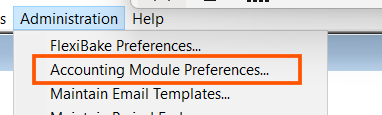
- Select Accounting Module Preferences from Administration along the Menu Bar.
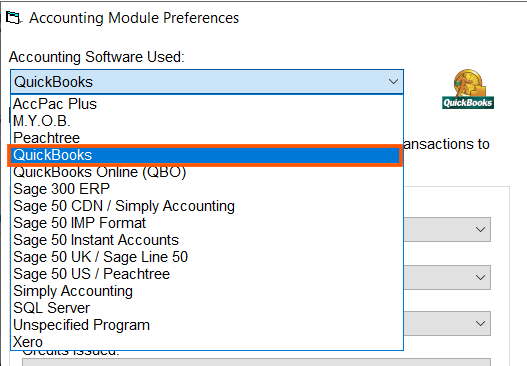
- This will open the Accounting Module Preferences window. Select QuickBooks from the Accounting Software Used dropdown to set FlexiBake for use with QuickBooks Desktop.
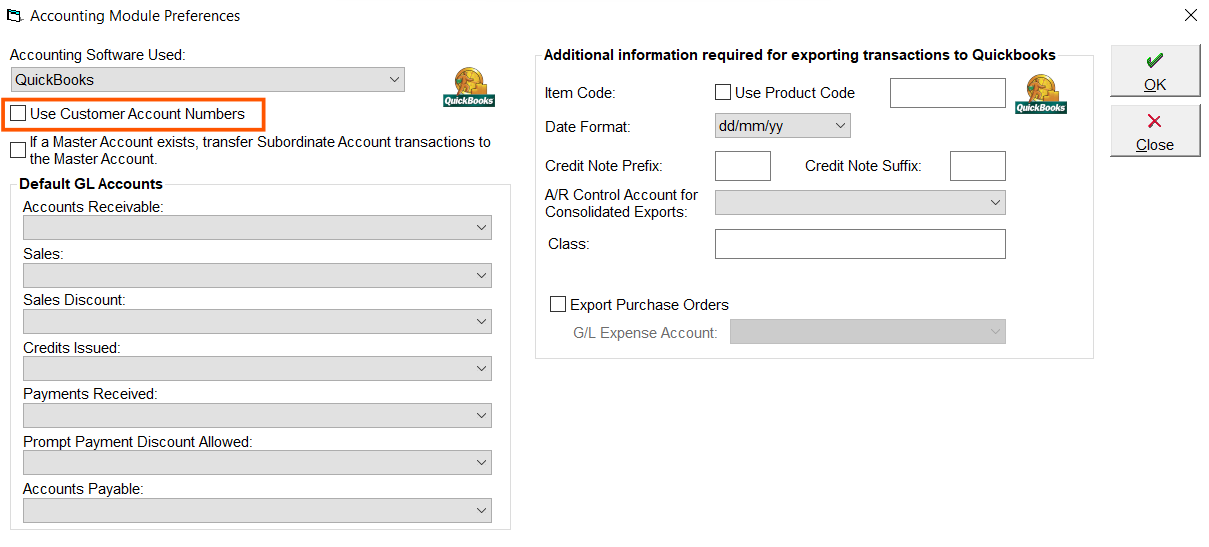
- If you intend to use FlexiBake customer account numbers in QuickBooks rather than Customer Names, check the checkbox titled Use Customer Account Numbers.
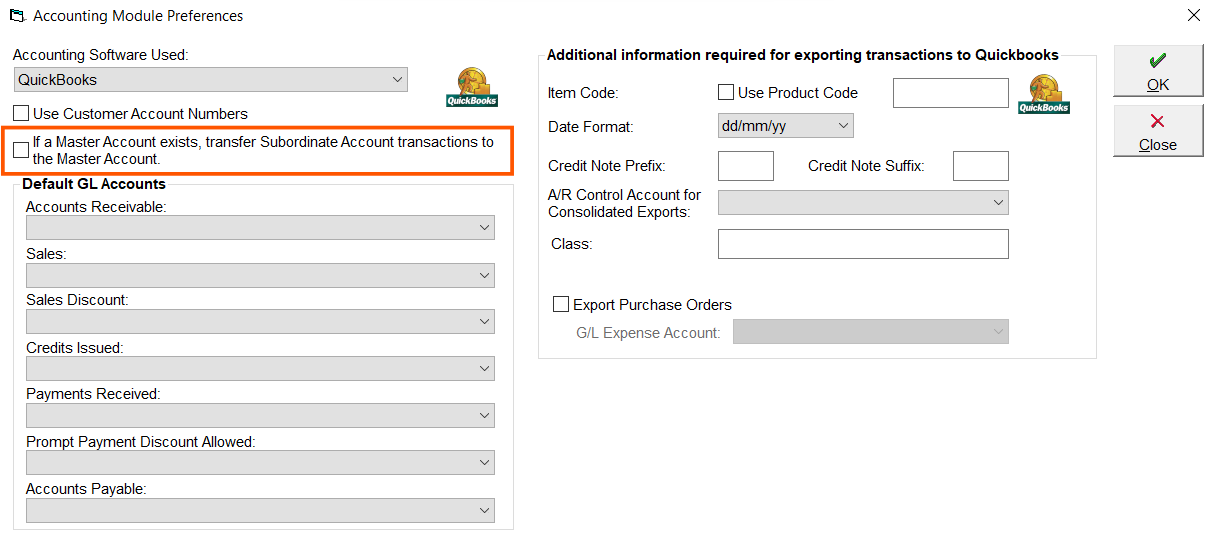
- If your FlexiBake Master and Sub-Accounts are considered as one company in QuickBooks, check the If a Master Account exists, transfer Subordinate Account transactions to the Master Account checkbox.
- Press 'OK' to Save QuickBooks Desktop as your Accounting Software, FlexiBake will then prompt you to add your General Ledger Accounts.

- Maintain General Ledger Accounts will open on pressing 'OK'. Enter the Account ID, Code, Name and Type according to your Chart of Accounts, these should be identical to how they appear in QuickBooks Desktop

You may Export your Chart of Accounts from QuickBooks Desktop and use this data to assist in entering General Ledger Accounts:
- In QuickBooks, select File > Utilities > Export > Lists to IIF Files.
- From the Lists of IIF Files window, select Chart of Accounts and select OK .
The program will prompt you for a location and a filename into which to save the file. We recommend naming the file Chart of Accounts, and saving the file onto your Desktop. IFF files may be opened with Notepad, or through Microsoft Excel.
- In QuickBooks, select File > Utilities > Export > Lists to IIF Files.
- Once you have finished entering General Ledger Accounts, press the "
 " button to return to Accounting Module Preferences and set your Default General Ledger Accounts.
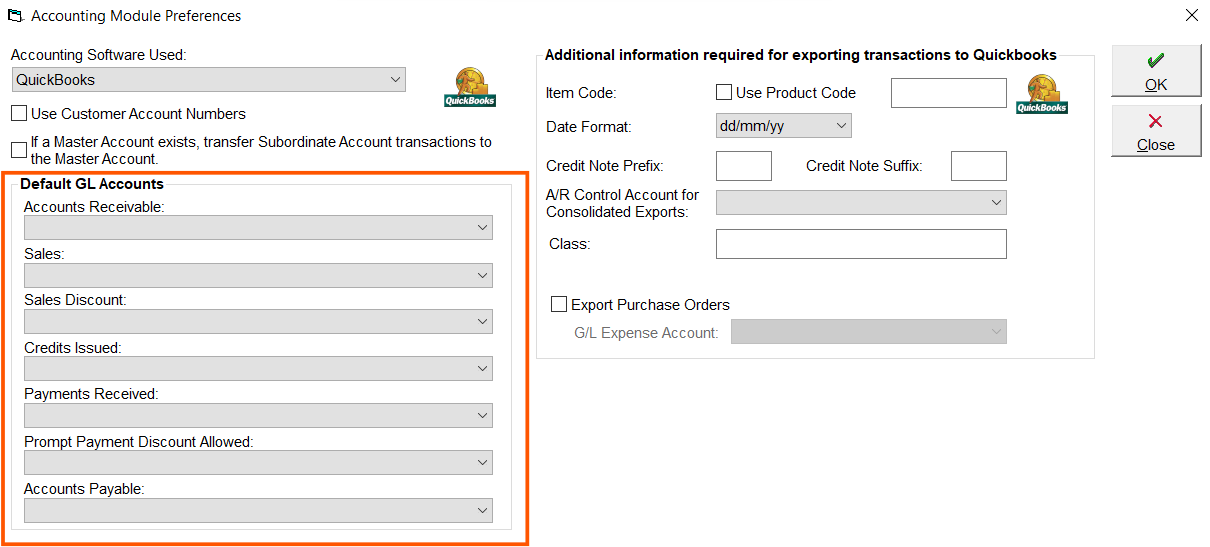
These are the General 'Bin' Accounts for regular transactions to fit into your Accounting Software as, unless you have a higher level account defined. Example, Product GL Code > Product Category GL Codes. - Once the default accounts are defined, press 'OK' to save your changes and preferences.
Item Code: Affects Export of Invoices and Products
Option 1: Consolidated Line Items
When exporting with Consolidated Line Items, you must uncheck the box that says "Use Product Code".
This tells FlexiBake that all sales should be attributed to a single generic item in Quickbooks. Every invoice will have one line item with the total sales for that invoice when you export invoice transactions to Quickbooks. You can read here for more details details on the export.
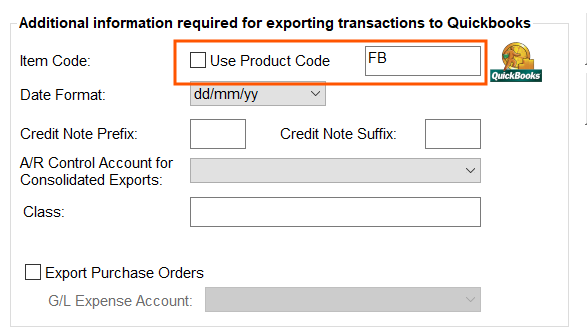
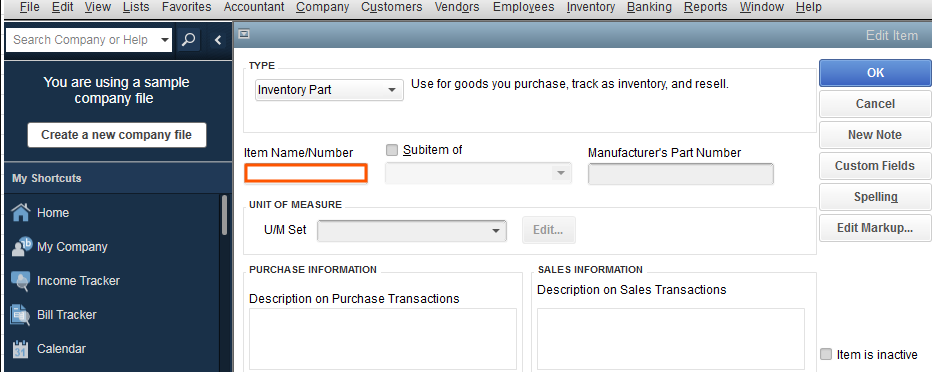
If you are exporting using consolidated line items, you will enter a generic code in the space provided. This code must match up with the "Item Name/Number" of an item in your Quickbooks.
Option 2: Exporting All Line Items
If you are exporting invoices with all the line items included on each invoice, you will check the box for "Use Product Code".
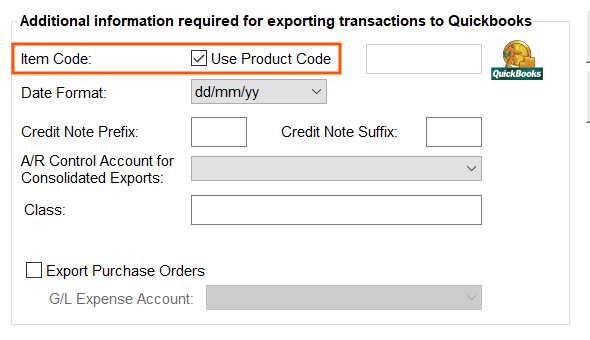
Use Product Code tells FlexiBake to export all the items for each invoice. It will bring in the Product Code and Product Name when that item shows up on the invoice in Quickbooks.
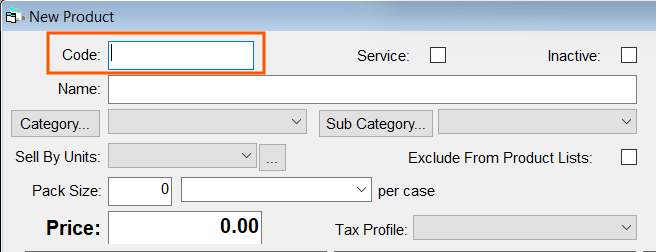
Match the "Product Code" in FlexiBake to the "Item Name/Number" in Quickbooks
These are the fields that need to match in order for an IIF file export to successfully match up your FlexiBake products with items in Quickbooks.
FlexiBake:
QuickBooks:
You Must Still Enter the Generic Code
You must still enter a generic code into the blank field displayed even if you are not consolidating your line items for the export. Quickbooks desktop still wants this for any products or transactions where it can't find a matching product. We recommend you enter FB in the Product Code box as this will help to tie those transactions directly with FlexiBake.
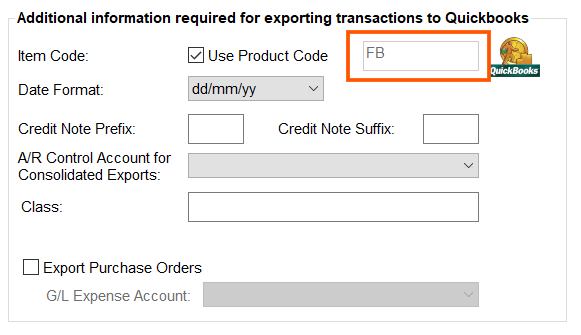
You also want a default value in the Use Product Code text field is that if you apply a payment or credit to a customer but not an invoice, in QuickBooks this will need to be applied against something. Entering this default value provides QuickBooks the needed field to apply the payment or credit note to.
Date Format
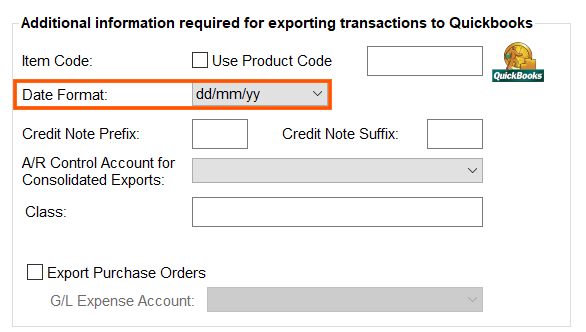
Date Formats are important to QuickBooks Desktop. Please note if these do not match QuickBooks will not accept the file, period. In North America, QuickBooks normally uses mm/dd/yy, whereas in other countries (e.g. Australia, UK) the date format is commonly dd/mm/yy.
- Enter your Date Format. This changes which Date Format is displayed on exported transactions.
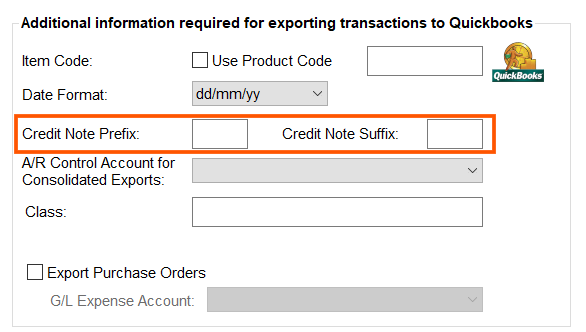
Credit Notes are handled differently in QuickBooks than FlexiBake, while FlexiBake treats Invoices and Credit Notes separately, QuickBooks will store these together. It's possible for a Credit Note and Invoice from FlexiBake to have the same Transaction Number which can cause errors in QuickBooks.
- To better separate the Credit Notes and Invoices as they are Imported into QuickBooks we can assign a Prefix or Suffix to Credit Notes, this will assist in creating a unique number and reduce any chance for this warning to appear.
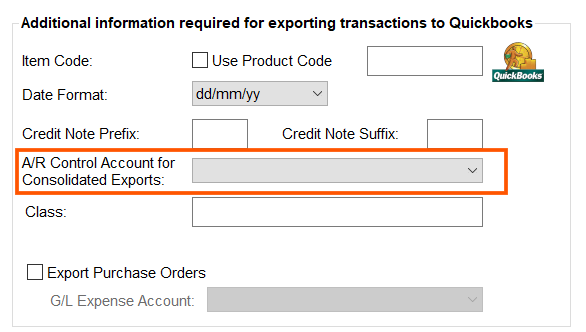
When performing Consolidated Exports, you may have an alternative Accounts Receivable account which is used when performing Consolidated Exports instead of the regular Default Accounts Receivable GL Account.
- The Selected A/R Control Account will be utilized when Exporting to QuickBooks with Consolidated Export marked, further details may be found here
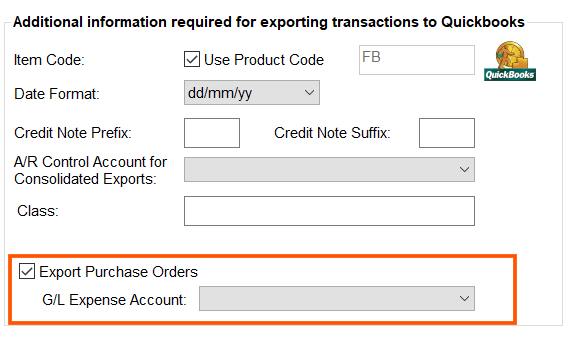
You may optionally Export Purchase Orders, this will export a list of Purchase Orders for the export period selected, a G/L Expense Account must be defined.
- When using Export Purchase Order, ensure you have defined a G/L Expense Account, otherwise errors may occur when exporting and the data will be unreadable in QuickBooks Desktop.
Remember to save by Pressing 'OK' after updating any GL Accounts, or Additional Settings!