Electronic Data Interchange (EDI) eliminates the manual overhead of sending billing documents by translating your FlexiBake data into a standardized format your clients' systems can read instantly. By setting up EDI Export Templates, you can facilitate, and even automate the delivery of invoices and credit notes, ensuring you get paid quickly and accurately.
This guide will walk you through configuring the format that these exports should follow, and setting up the digital location that the export file should be sent to for your customer's system to pick it up.
Each provider or client may require different fields or file types — you may wish to follow these steps for a baseline setup, then adjust details as required by your EDI partner.
Create EDI Export File Template
Step 1
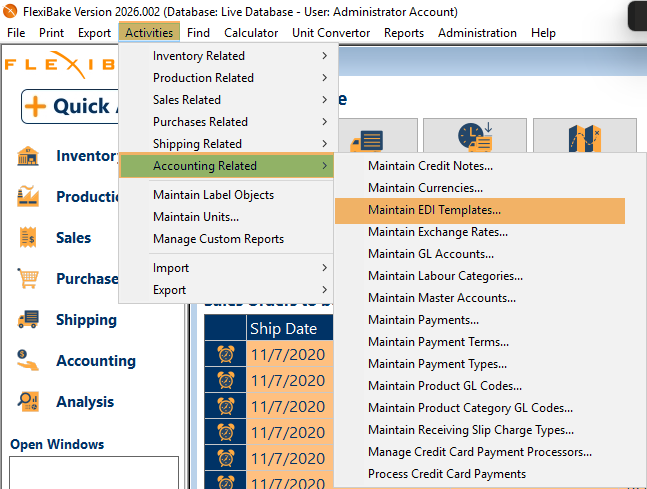
In the upper menu bar, click Activities. Go to Accounting Related, then select Maintain EDI Templates.
Step 2
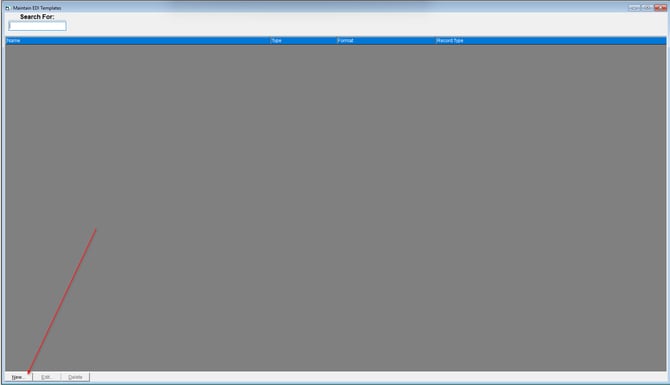
In the bottom left corner, click New.
Step 3
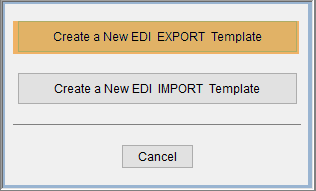
Select Create a New EDI EXPORT Template.
Step 4
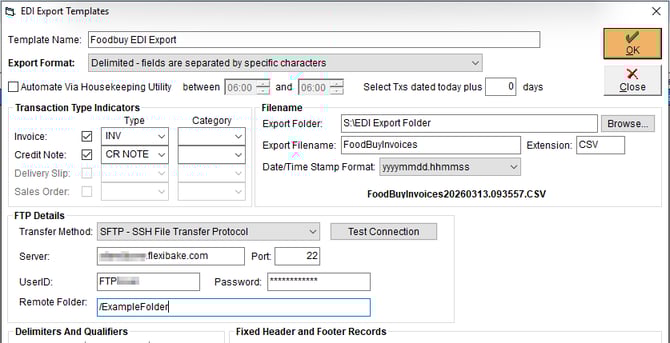
Enter a name for your new EDI template in the Template Name field.
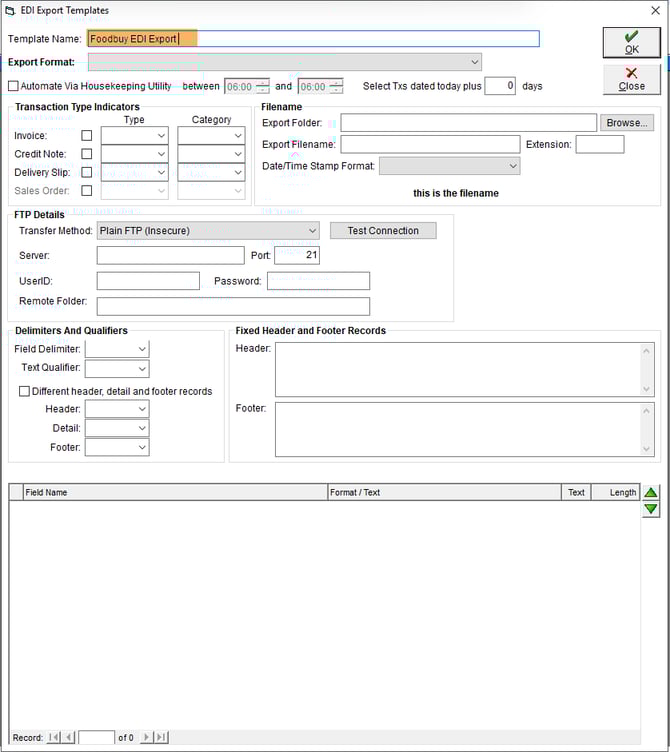
Step 5
Set the Export Format to “Delimited - fields are separated by specific characters.”
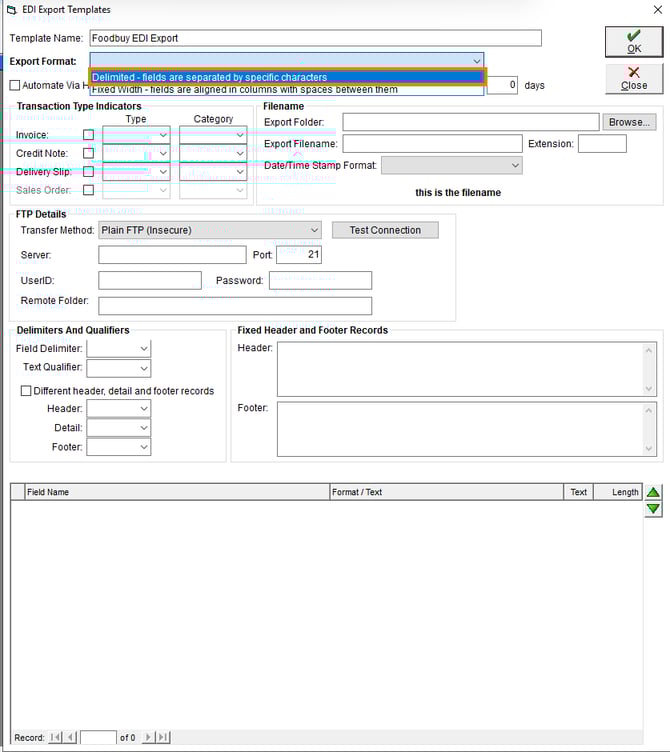
Step 6
For Export Folder, click the Browse button and select where export files will be stored.
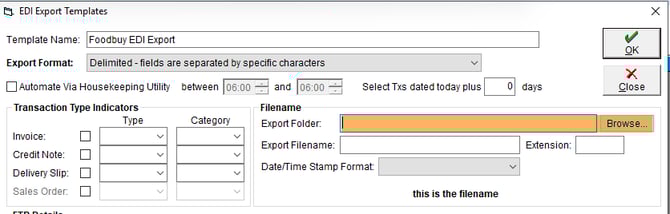
If you’re on the cloud, see Transfer Files To/From Cloud on PC or Transfer Files To/From Cloud on Mac OS for setup instructions.
Step 7
In Export Filename, enter the name to use for the exported file.
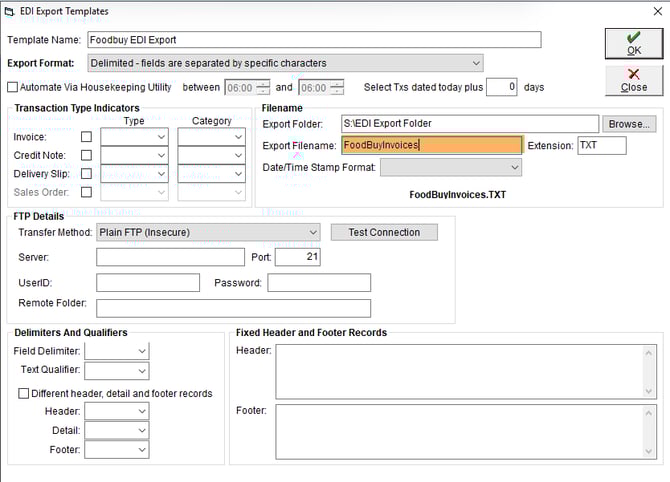
Tip: Check with your provider for specific filename requirements.
Step 8
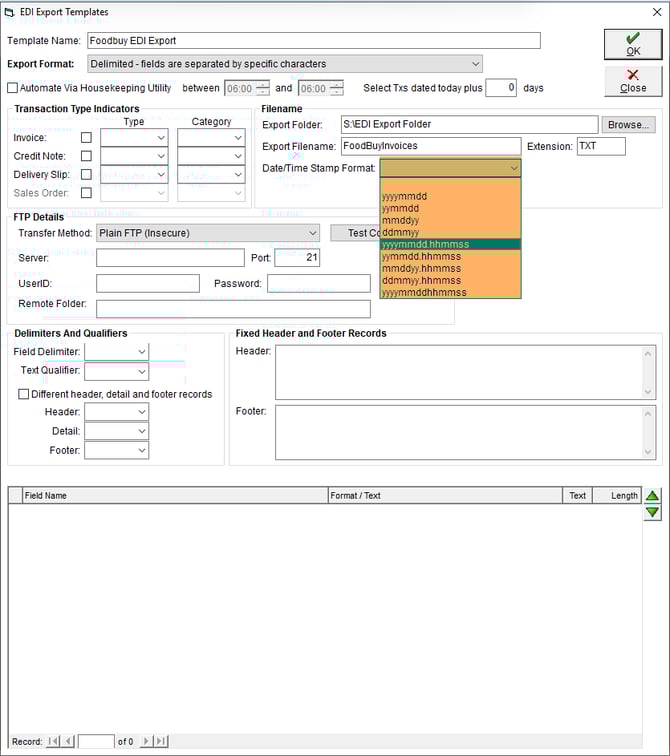
(Optional) Choose your Date/Time Stamp Format to append date or datetime info to filenames for easier tracking. This is highly recommended to distinguish multiple export files from one another.
Step 9
In the Delimiters and Qualifiers section, use the Field Delimiters drop-down to select “Pipe (|)” to export as a text file, or "Comma (,)" to export as a CSV from the Field Delimiter drop-down.
Note that the Extension for the filename will adjust to “TXT” or “CSV” automatically based on your selection.
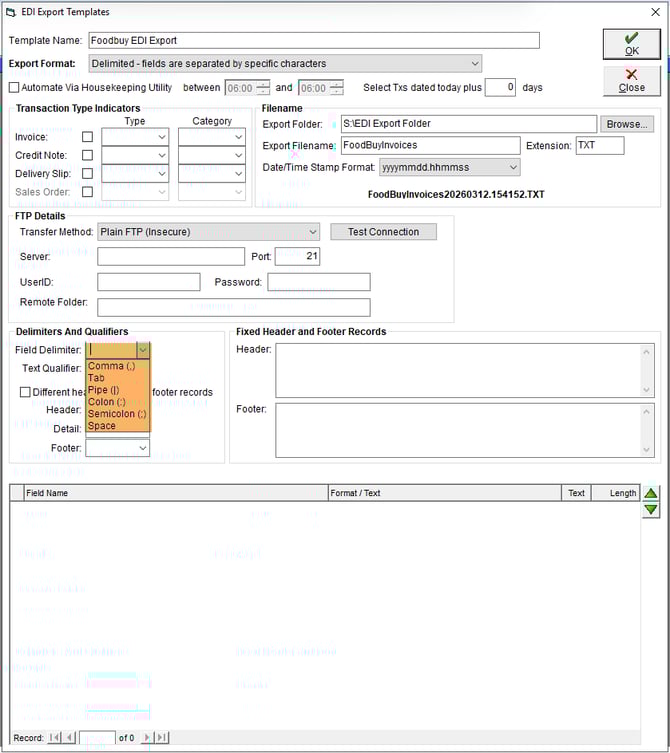
Note: CSV exports require commas to be removed from all data fields.
Step 10
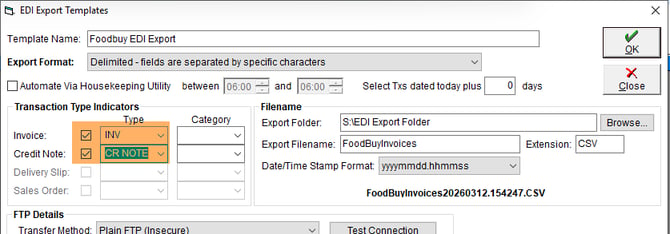
Under Transaction Types and Indicators, check the Invoice box and select “INV” as the Type.
If credit notes are required, also check Credit Note and select “CR NOTE”
Step 11
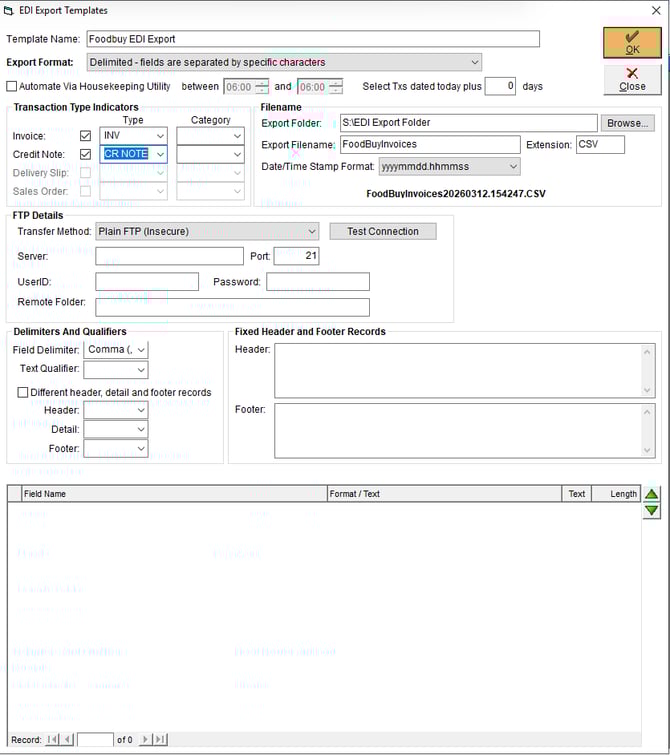
Click OK to save, then close and re-open the template record before editing further.
Step 12
Column headers are optional but recommended for troubleshooting and clarity.
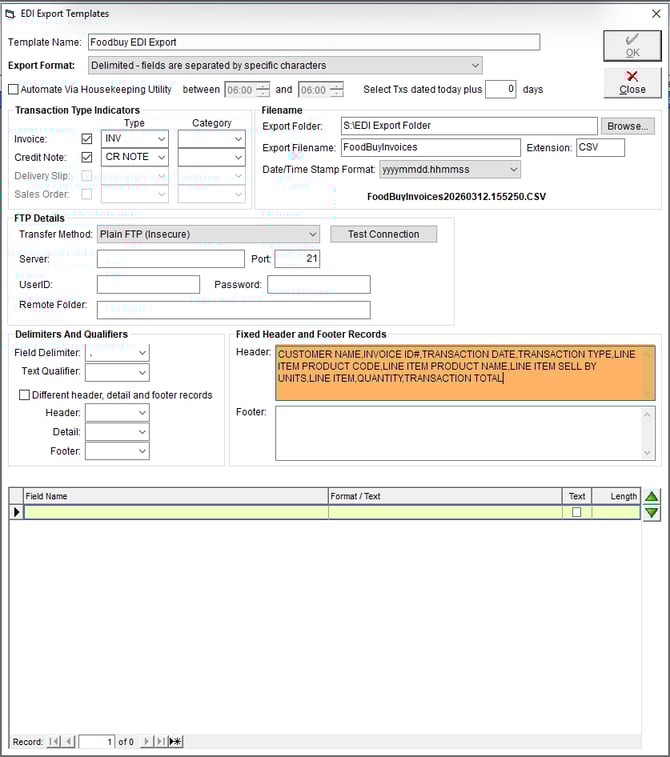
Tip: Copy and paste these basic headers (or review the attached .TXT file for options).
Pipe delimited:CUSTOMER NAME|INVOICE ID#|TRANSACTION DATE|TRANSACTION TYPE|LINE ITEM PRODUCT CODE|LINE ITEM PRODUCT NAME|LINE ITEM SELL BY UNITS|LINE ITEM|QUANTITY|TRANSACTION TOTAL
Comma delimited:CUSTOMER NAME,INVOICE ID#,TRANSACTION DATE,TRANSACTION TYPE,LINE ITEM PRODUCT CODE,LINE ITEM PRODUCT NAME,LINE ITEM SELL BY UNITS,LINE ITEM,QUANTITY,TRANSACTION TOTAL
Step 13
For Field Names, click once on the top line to reveal the drop-down arrow. Then select the correct field.
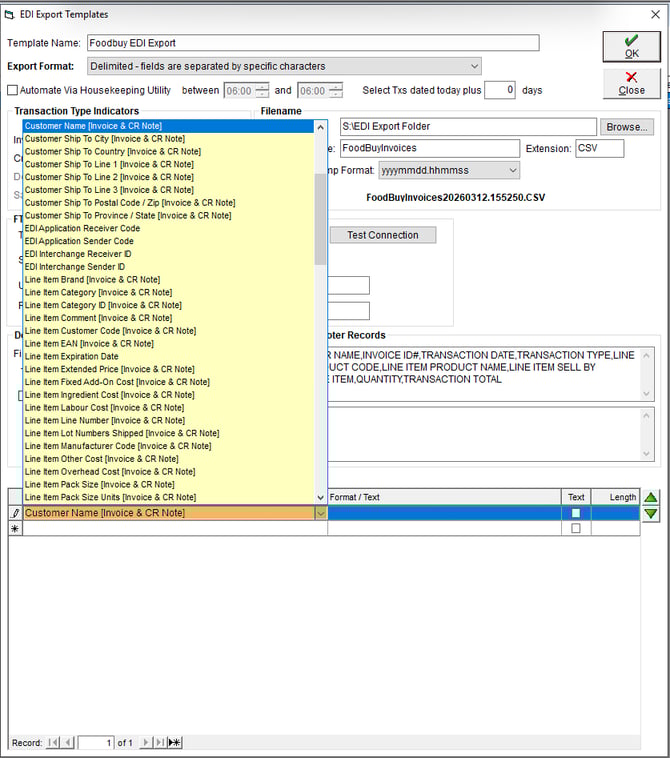
There is a file attached to this article called Available Fields.xlsx that can be used for reference if you are unsure which data points are available.
Step 14
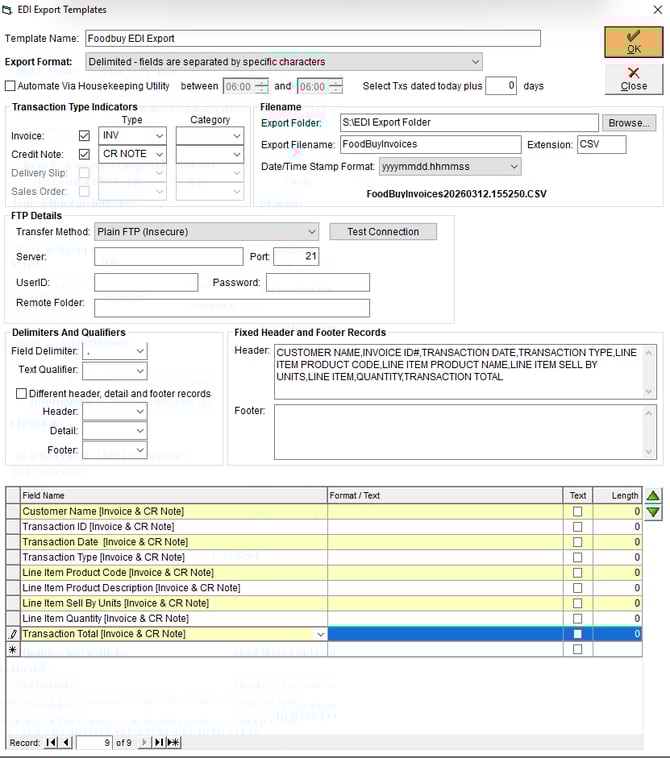
Check that your defined column headers align with your field names for consistency.
Step 15
Double check all entered information for accuracy and that all fields match your provider’s requirements.
Step 16
Click OK to save your finalized template.
Add FTP/SFTP Details
To transmit your EDI files to your customers, you’ll likely need to send them via FTP or SFTP to a location where your client can access and import the files into their system.
Step 1
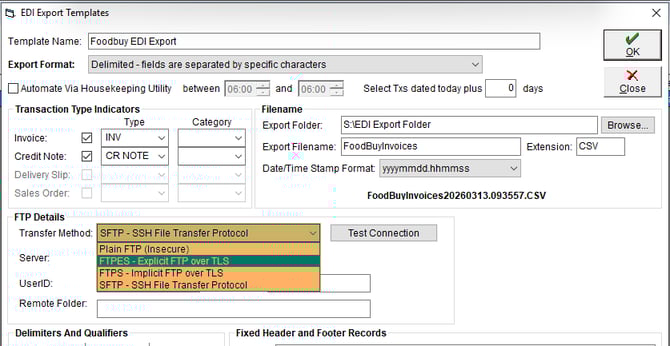
Select the transfer method you want to use in the EDI Export template. Options include:
- Plain FTP
- Implicit FTP
- Explicit FTP
- SFTP
The port will automatically update according to the transfer method selected.
Step 2
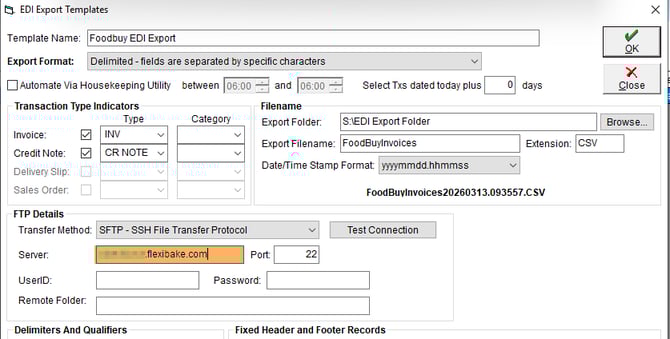
In the Server field, enter the address of the server where the client or EDI provider wants to receive EDI files.
Step 3
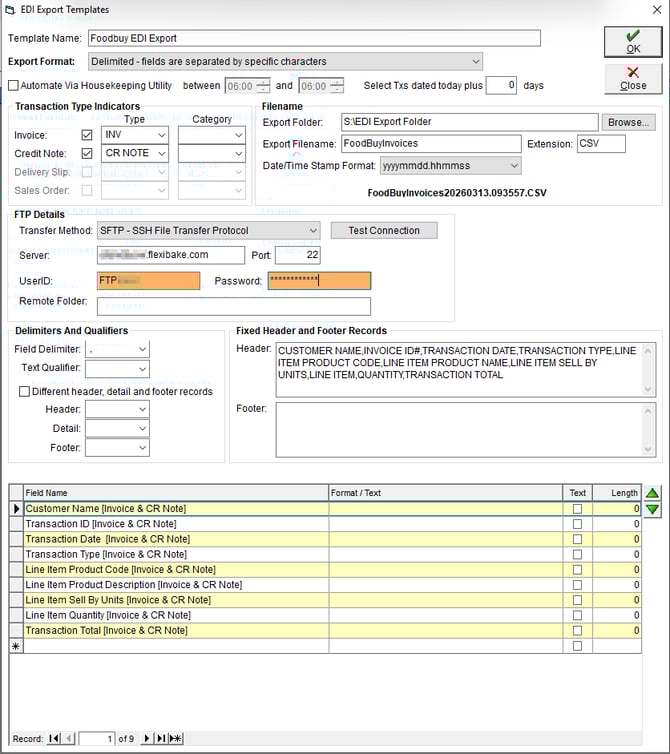
Add the User ID and Password required to access the server. Your EDI provider or client will supply these credentials.
Step 4
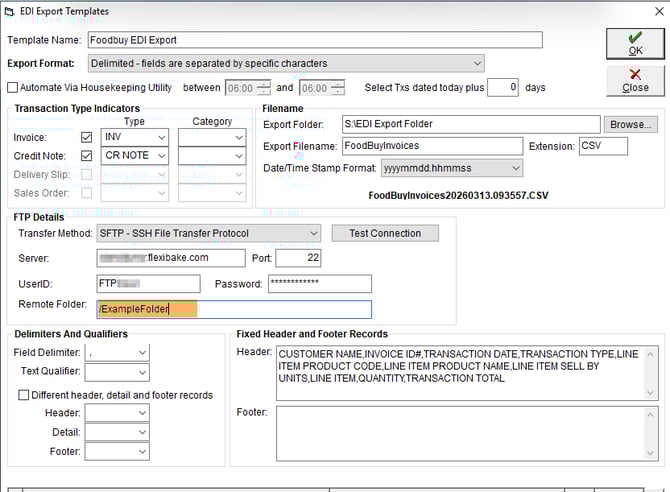
(Optional) If the EDI files must be placed in a specific folder, enter that folder’s path in the Remote Folder field.
Step 5
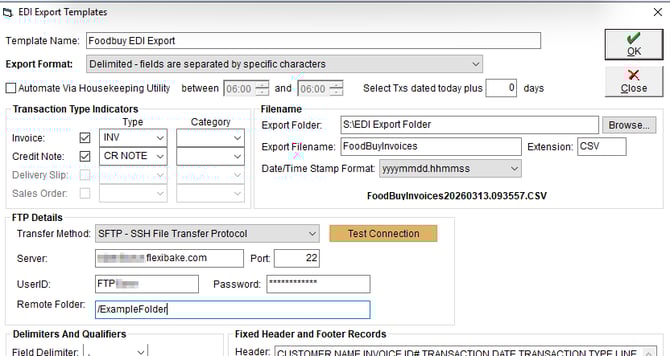
Check that connection can be made to the file location you've set by clicking on the Test Connection button. A dialog box will indicate if the test succeeded or failed.
Step 6
Save your changes by clicking the OK button.